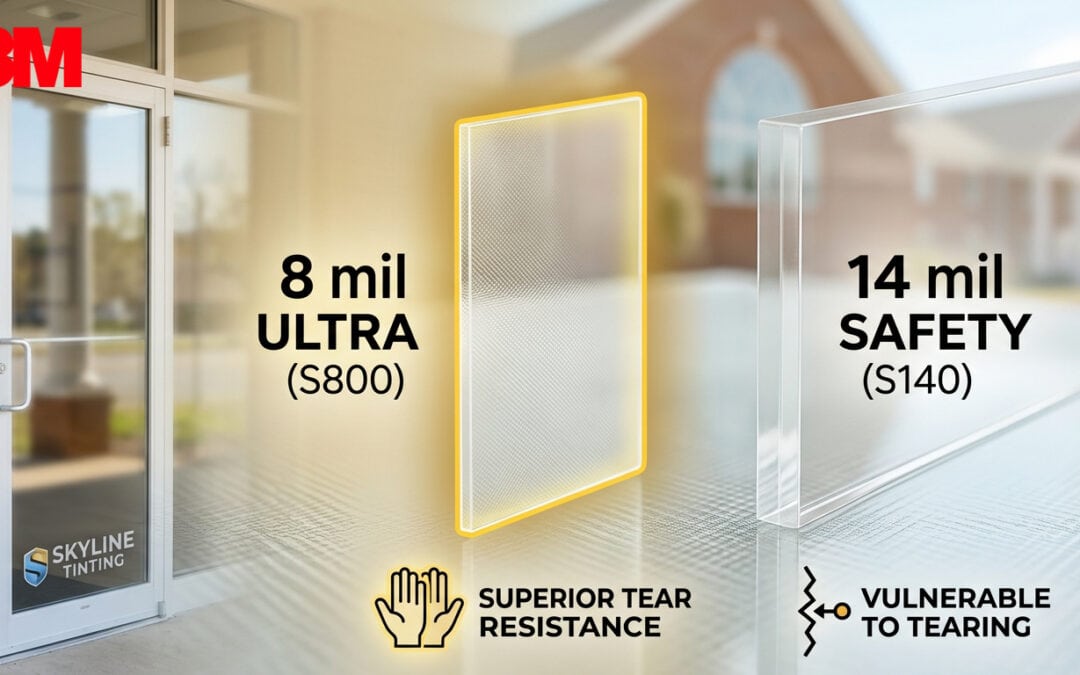
When a church, school, or business owner starts shopping for security window film, almost everyone lands on the same instinct: the thicker the film, the tougher it must be. It’s a fair assumption. With lumber, steel, or a phone case, more material usually means more strength.
Security window film doesn’t play by that rule. When your goal is stopping — or dramatically slowing — a break-in, a thinner film can protect a door or window better than one nearly twice as thick. Here in Hampton Roads, we get this question constantly from congregations and school administrators weighing 3M’s 8-mil Ultra S800 against the thicker 14-mil S140. Here’s the honest, plain-English answer.
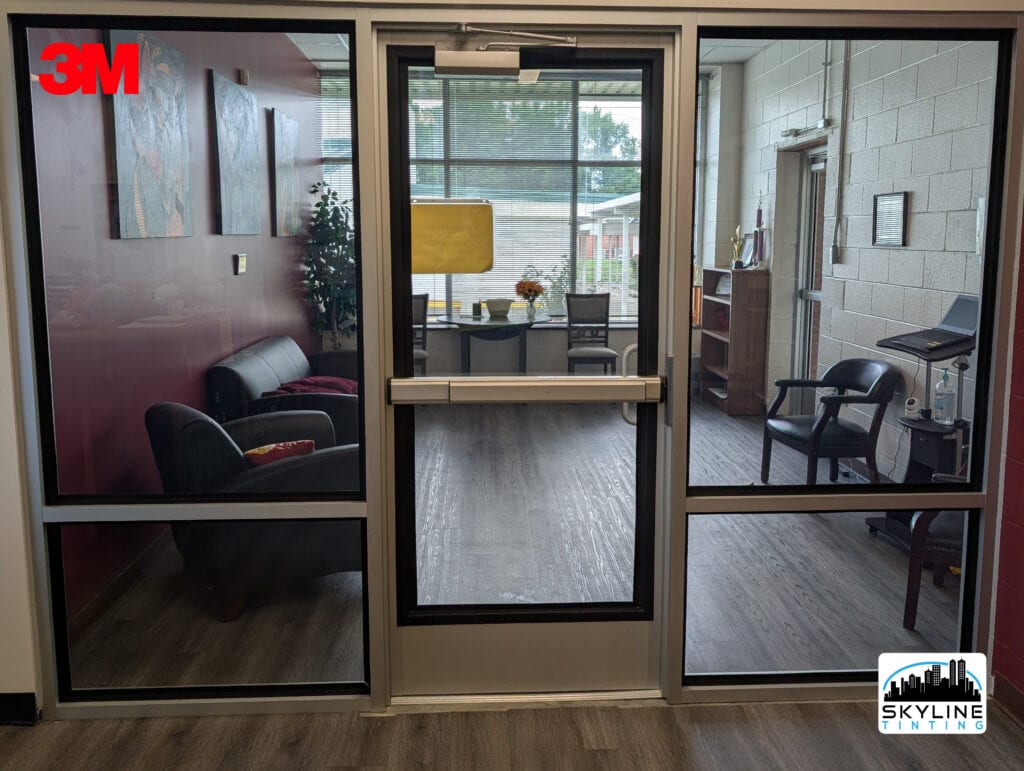
Completed 3M Ultra S800 security film and Pentagon Protection frame attachment on the office foyer doors and windows at Perquimans County Schools, NC — clear protection that keeps the view and the daylight.
What This Post Covers
1
What a forced-entry attack actually does to filmed glass — and why it’s all about buying time.
2
Why tear resistance, not thickness, is the number that decides how well a film protects you.
3
How 3M Ultra S800 (8-mil) out-performs the thicker S140 (14-mil) where it counts.
4
The frame-attachment step that matters more than the film you choose.
First, Picture What a Break-In Does to a Window
A burglar or vandal isn’t admiring your glass — they’re trying to make a hole big enough to reach or climb through, fast and quietly. On unprotected glass, that takes one or two hits.
Add security film and the whole equation changes. The glass still breaks, but the film holds the shattered pieces together like the plastic layer in a car windshield. Now the intruder has to keep hitting the same spot, over and over, trying to tear the film itself open. Every extra second is loud, exhausting, and risky — which is exactly the point. Security film buys time, and time is what sends most intruders looking for an easier target.
“Forced entry is a tearing problem, not a thickness problem. The film only fails when a tear starts and spreads — so tear resistance is what actually buys you time at the window.”
The Number That Really Matters Isn’t Thickness
Once the glass is broken and the film is holding, that film only gives way when a tear rips it open. So the real question isn’t “How thick is it?” It’s “How hard is it to start a tear — and how hard is it for that tear to spread?”
Think of paper. A single thick sheet of cardstock feels sturdy, but once a small rip starts, it tears straight across. Now picture a woven fabric or a phone book — thinner material, but built so a rip is incredibly hard to start and even harder to spread. That difference in construction beats raw thickness every time.
How 3M’s Ultra Film Is Built Differently
Standard security films get strength the simple way — they stack up thicker layers of polyester, usually one to four plies, so a 14-mil film is basically a thicker slab than a 7-mil one. 3M’s Ultra series takes a completely different approach: it laminates together dozens of micro-thin layers — up to 42 of them — cross-woven so their grain runs in different directions. It’s the plywood principle: many thin, cross-laid layers resist tearing far better than one thick plank.
The payoff is dramatic. Layer for layer, that micro-layered build delivers roughly seven times the tear resistance of the same thickness of ordinary polyester film, and it stretches farther before tearing than any other film in 3M’s safety lineup. It “gives” with the blow and absorbs the shock instead of splitting — exactly what you want when someone is swinging a bat or pry bar at the same spot again and again.
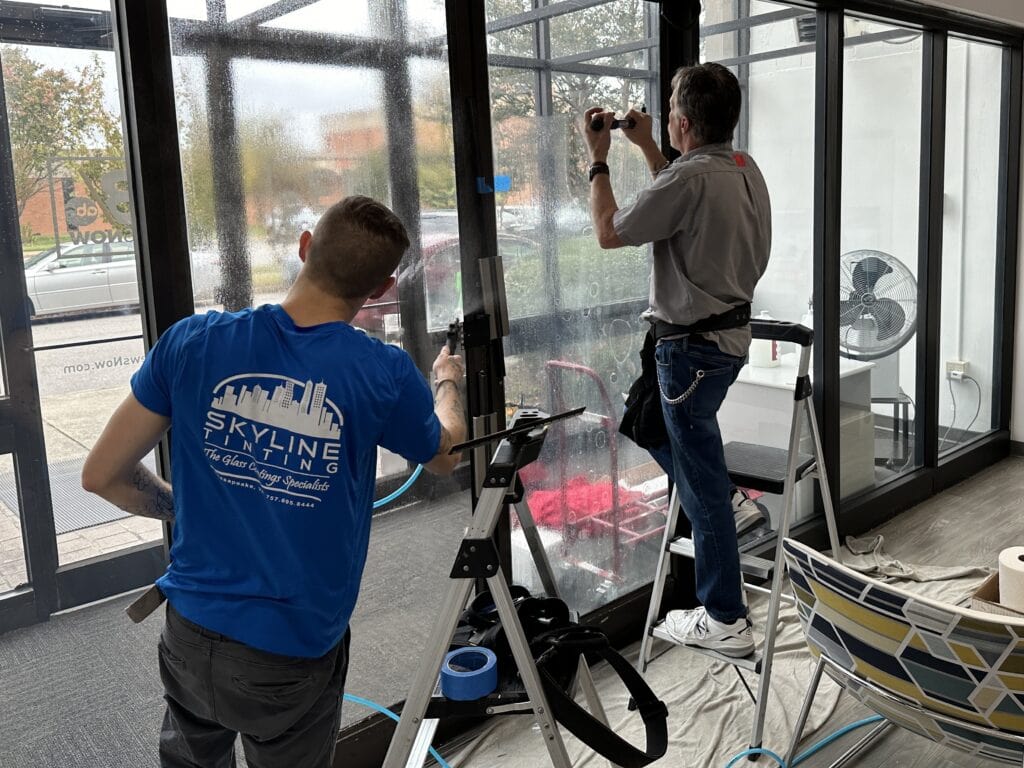
Our team installing 3M Ultra S800 security film and Pentagon Protection frame attachment at the WVEC TV13 (13News Now) studios in Norfolk, VA.
3M Ultra S800 vs. 3M Safety S140, in Plain Terms
Let’s put the two films side by side. The Safety S140 is a legitimately strong product — at 14 mils it’s considerably thicker than the Ultra S800 and built from three plies, with a very high break strength around 350 pounds per inch. Nobody should call it weak. If your only yardstick is thickness and raw pulling strength, it wins.
The Ultra S800 is only 8 mils — noticeably thinner. But because of its micro-layered build, it out-tears thicker standard film mil-for-mil and stretches farther before failing. In a forced-entry situation, where the film fails by tearing, that tear resistance does the heavy lifting — not the number on the spec sheet. And because Ultra is thinner and clearer, your windows look exactly the same and keep every bit of natural daylight. For a sanctuary or a classroom, that invisible protection matters.
The Unsung Hero: Attaching the Film to the Frame
Here’s the part most comparisons leave out — and it may matter more than the film itself. A film that’s only stuck to the glass has one weak point: the edge of the frame. When glass breaks — especially the tempered glass in most door lites, which crumbles all at once — the film can hold the pieces together beautifully and then the entire panel pops out of the frame in one sheet. The intruder is through the opening, film and all.
The fix is an attachment system that bonds the film to the window frame, so the glass-and-film “sandwich” stays locked in the opening even after it shatters. Pair a high-tear-resistance film with a proper frame attachment and you turn a window into a genuine barrier. On tempered glass, that attachment isn’t optional — it’s the whole ballgame. Whichever film you choose, this is the step that makes it work.
Where Forced-Entry Risk Actually Lives
Glass Entry Doors & Sidelites
A reach-through next to the lock defeats the deadbolt in seconds. The most common breach point.
Ground-Floor Windows
Low, accessible, and out of sight — especially on the sides and rear of a building after hours.
Storefront Glazing
Large panes are a smash-and-grab magnet. Film keeps merchandise behind an intact barrier longer.
After-Hours Vulnerability
Empty buildings give intruders time. Every added minute of delay raises the odds they give up.
The Hampton Roads Factor
From congregations along Battlefield Boulevard in Chesapeake to schools in Virginia Beach and storefronts in Norfolk and Portsmouth, our region’s houses of worship, campuses, and small businesses all share the same soft spot: a lot of accessible glass at ground level. For these buildings the goal usually isn’t stopping a determined attacker forever — it’s delay and deterrence: protecting the people inside and holding an intruder outside long enough for staff to respond or for help to arrive. An Ultra-grade film anchored to the frame gives you the longest delay per dollar, and it looks like you did nothing at all.
An Honest Word About What Film Can & Can’t Do
Security film is powerful, but it isn’t magic, and any reputable installer will tell you so. It is not bulletproof, not burglar-proof, and not hurricane-proof — 3M is explicit that it’s not designed to outright stop an intruder. The glass can still break. What it does do is turn a three-second smash-and-reach into a prolonged, loud, physically punishing struggle — the kind most intruders abandon, and that gives everyone inside precious time to respond. That’s the honest, and genuinely valuable, promise of a well-chosen security film.
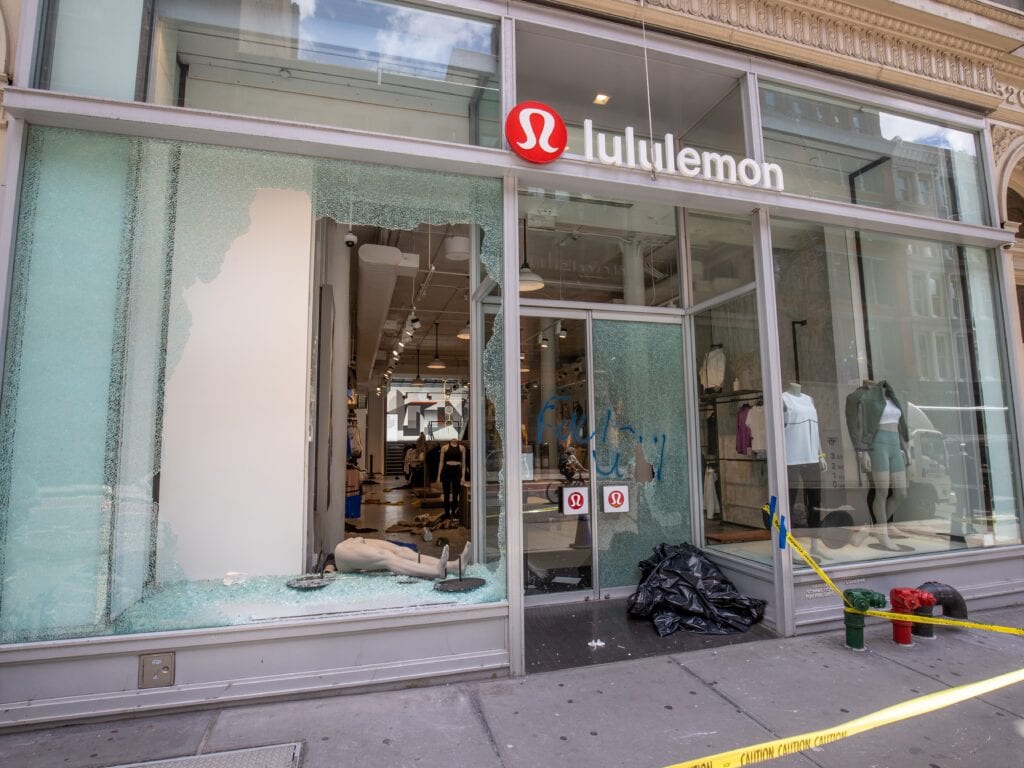
Without security film, ordinary glass leaves a gaping hole after a single break — the exact vulnerability that tear-resistant film and a proper frame attachment are designed to prevent.
The Bottom Line
When it comes to forced entry, don’t shop by thickness — shop by tear resistance and frame attachment. That’s why a thinner 8-mil 3M Ultra S800, properly anchored to the frame, can protect your people better than a thicker film, and look better doing it.
Protect Your Church, School, or Business the Right Way
As a 3M Authorized Window Film Dealer serving all of Hampton Roads, Skyline Tinting will assess your glass, recommend the right film-and-attachment system for your threat level, and install it right. Get a free, no-pressure security-film assessment.
Sources
EPD Window Film — Myth: Thicker Security Films Provide More Tear Resistance Than Thinner Films
Olympus Window Films — 3M Window Security Laminate (micro-layer construction & tear resistance)
Window Film Depot — 3M Window Security Film Explained
Window Film Depot — 3M Security Film Cost & Spec Guide (S140 thickness & break strength)
Accent Distributing — The Science Behind 3M Safety Film
3M Scotchshield Ultra S800 — Technical Data Sheet
Skyline Tinting LLC — Security Window Film in Hampton Roads, VA