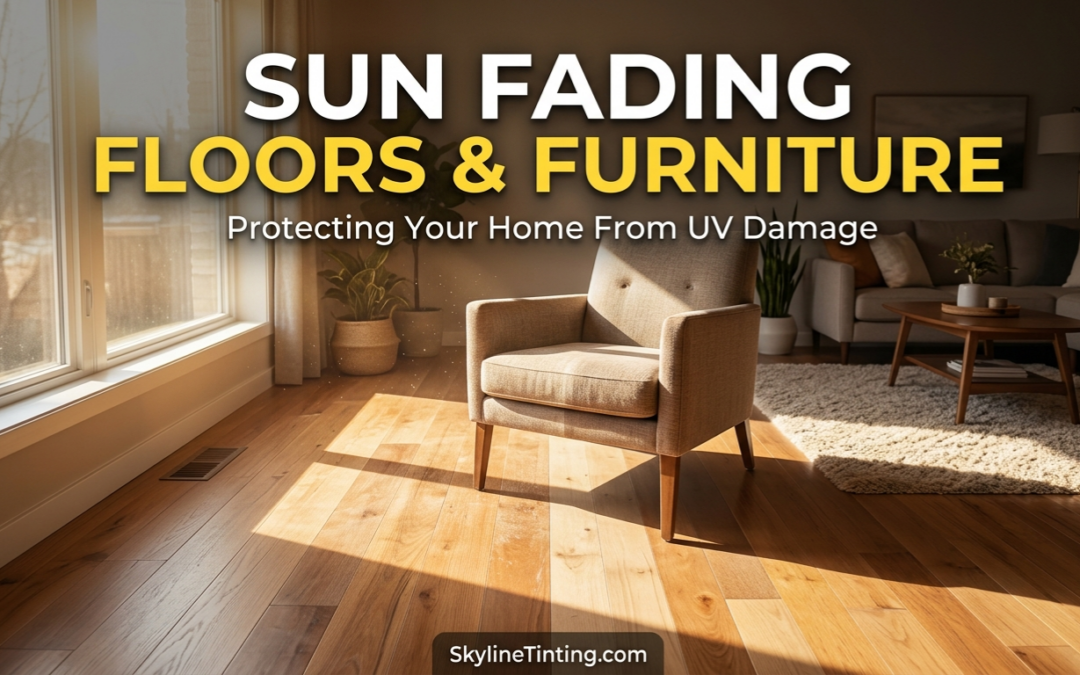
Your Floors and Furniture Are Fading. Coastal Sunlight Is Why.
Furnishing a home in Hampton Roads isn’t cheap. From hardwood floors to area rugs, sofas to curtains — the investment adds up fast. And every hour of sunlight pouring through your windows is quietly working against you.
Here in coastal Virginia, we live with natural light year-round. That’s one of the best things about the 757. The water views. The bright, open rooms. The way afternoon sun rolls through a Virginia Beach condo or fills a craftsman living room in Portsmouth’s Olde Towne. But those same windows that make your home feel alive? They’re also letting in the forces that bleach your hardwood, fade your upholstery, and dull your rugs — slowly, steadily, every single day.
Most homeowners assume UV rays are the whole story. Block the UV and you’ve solved the problem, right? The truth is more complicated — and knowing the full picture is what separates a smart solution from one that leaves you half-protected.
“UV radiation, solar heat, and visible light work together to degrade interior furnishings — no single factor tells the whole story, and no single solution addresses all three.”
What’s Actually Causing Your Floors and Furniture to Fade?
Fading isn’t caused by one thing. It’s the result of several forces working together against your interior — and in Hampton Roads, each one hits harder than in most parts of the country.
Source: International Window Film Association (IWFA)
What’s Fading Your Hampton Roads Home — and By How Much
Key Takeaway: You cannot stop fading entirely. What you can do is attack the biggest contributors aggressively enough to dramatically slow the process — extending the life of your investment by years. Window film addresses all four categories simultaneously.
Why Hampton Roads Is a Particularly Tough Environment
The fading problem isn’t the same everywhere. Hampton Roads sits at the junction of three rivers, the Chesapeake Bay, and the Atlantic Ocean — which means year-round high humidity on top of already intense sun exposure. Humidity accelerates oxidation in wood fibers, weakens dye bonds in fabrics, and compounds the damage that UV and heat are already doing. It’s a multiplier effect most generic fading resources don’t account for, because most aren’t written for a coastal Virginia climate.
The Coastal Multiplier Effect
Add to that the sheer number of homes in this region with water-facing windows — Virginia Beach oceanfront condos, Norfolk harbor views, waterfront properties in Chesapeake’s Great Bridge neighborhoods, homes along the James River in Newport News and Hampton — and you have some of the most sun-exposed interiors in Virginia. Those views are worth protecting. So is everything inside.
Why Window Film Is the Right Answer Here
Most people’s instinct is to block the sun with heavy drapes or blackout shades. That works, but it means giving up the light and the view you’re paying for. Window film takes a completely different approach: it targets the damaging elements before they enter the home, while letting natural light through unimpeded.
You’re Not Just Protecting Floors — You’re Protecting a Decision
Refinishing a hardwood floor runs $3–$8 per square foot. Replacing quality upholstered furniture can easily run $1,500–$5,000 per piece. A whole-home window film installation costs a fraction of what a single floor refinish runs — and it protects everything simultaneously, including reducing the load on your HVAC system during Hampton Roads summers.
The Real Cost of Doing Nothing
Window Film vs. Replacing What Fading Destroys
- Hardwood floor refinish — $3–$8 / sq ft
- Full floor replacement — $8–$20 / sq ft
- Quality sofa replacement — $1,500–$5,000+
- Area rug replacement — $500–$3,000+
- Window treatments / drapes — $200–$1,500 per window
- Whole-home installation — $750–$3,000 typical
- Blocks up to 99.9% of UV rays — the #1 fading cause
- Rejects up to 83% of solar heat
- Protects floors, furniture, rugs, artwork all at once
- Film warranties up to 15 years — one install, years of protection
What About Just Closing the Blinds?
Yes, closing your blinds blocks sunlight. It also blocks your view, reduces the feel of the space, and requires you to remember to do it every day for every window during every peak sun period. Window film works while you’re out of the house, while you’re not thinking about it, and while you’re staring out at the Chesapeake with the blinds wide open. That’s a different category of solution.
Blinds vs. Window Film — What You’re Actually Comparing
Film: Fully preserved
Film: Up to 99.9%
Film: Set and forget
Film: Always
The Right Film for Your Home’s Specific Exposure
Not every Hampton Roads home has the same challenge. A west-facing great room in Chesapeake takes a beating from afternoon sun that an east-facing bedroom doesn’t see until morning. An experienced installer evaluates your home’s orientation, window types, and priorities before recommending anything — no one-size-fits-all approach.
Some homeowners want maximum heat rejection with a lightly tinted glass. Others want a completely invisible solution that handles UV and some heat with no change in appearance. The right answer depends on your home, your exposure, and your goals. That’s exactly the conversation we have on every free quote.
Protect Your Hampton Roads Home
Stop the Fade Before It Starts
Serving Virginia Beach, Norfolk, Chesapeake, Portsmouth, Hampton, Newport News, and Suffolk.
Contact Skyline Tinting for a free, no-obligation on-site estimate.
Sources:
International Window Film Association (IWFA) — Fading Contributing Factors Data
U.S. Department of Energy — Window Films and Energy Savings
3M Window Film — UV and Sun Control Solutions